Tinubu Assures Investors as Ogun, DP World Sign MoUs on $7bn Deep Seaport Projects
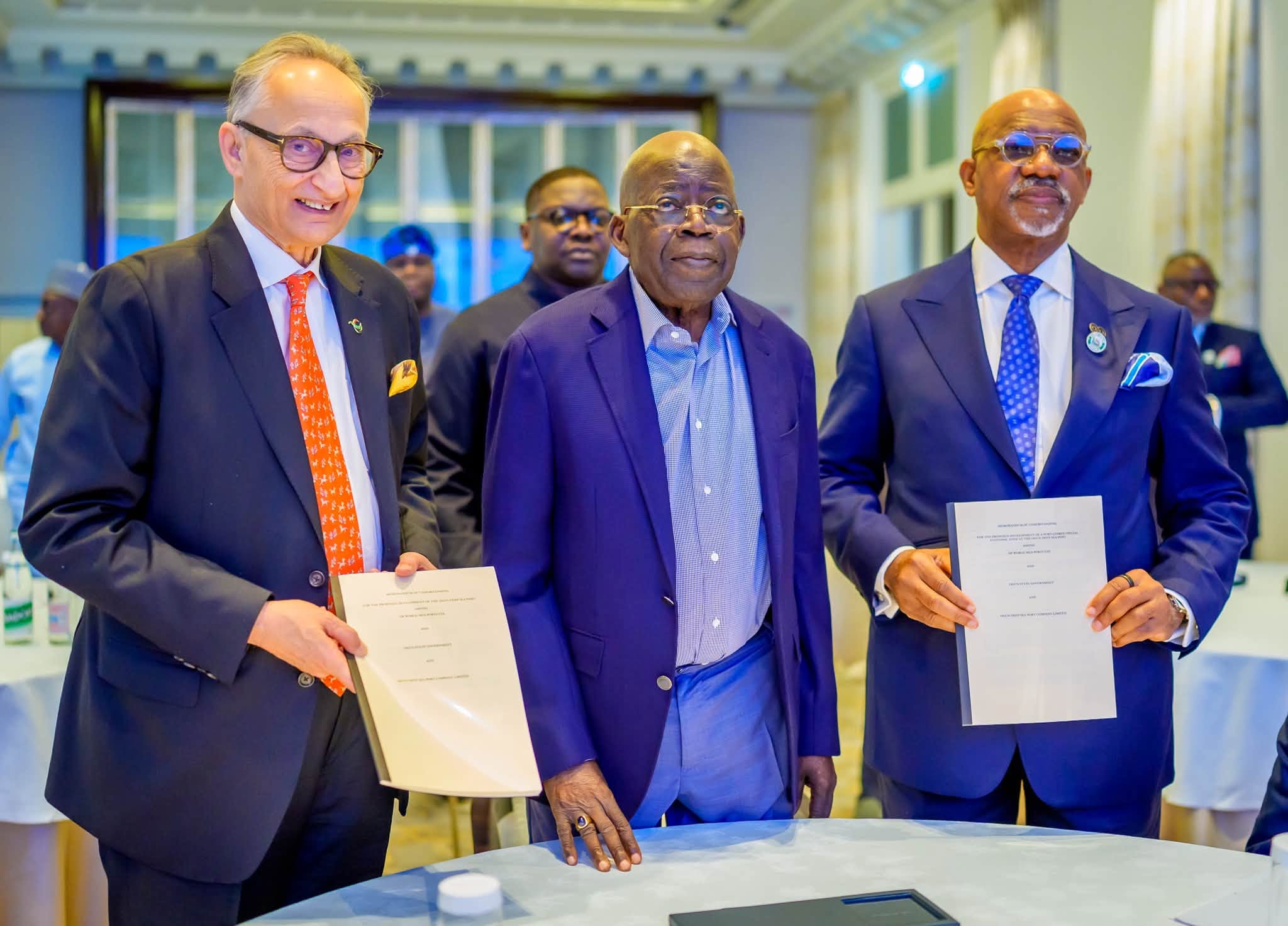
President Bola Ahmed Tinubu has assured investors that the Federal Government will continue to provide clear regulations, policy stability and a predictable business environment as Nigeria seeks to attract more long-term investment.
The President gave the assurance in Paris, France, during the signing of Memoranda of Understanding between the Ogun State Government and DP World for the development of the Ogun State Blue Marine Special Economic Zone and the Gateway Deep Seaport.
The signing was attended by Ogun State Governor Dapo Abiodun and senior Nigerian government officials, including Minister of Marine and Blue Economy Adegboyega Oyetola and Nigerian Ports Authority Managing Director Abubakar Dantsoho.
According to the Presidency, the proposed projects are expected to involve an initial investment of more than $7 billion in Nigeria.
What the Ogun Deep Seaport Could Change
The proposed Gateway Deep Seaport at Ogun Waterside is planned with a four-kilometre berth and an 18-metre draft.
The Federal Government says the facility is intended to help reduce pressure on existing Lagos ports, particularly Apapa and Tin Can Island, while improving the movement of goods and reducing logistics delays.
The deeper draft would also allow the port to accommodate larger vessels used in international shipping.
The port is being planned alongside a proposed 10,000-hectare Ogun State Blue Marine Special Economic Zone, where the government says manufacturing, processing and export-oriented businesses are expected to operate.
President Tinubu said the combination of the port and industrial zone could create an integrated logistics and manufacturing corridor rather than simply another cargo-handling facility.
Jobs and Economic Impact
According to the Presidency, the projects could create more than 50,000 direct jobs when fully developed, alongside additional indirect employment opportunities.
The government also expects the developments to support non-oil exports by creating opportunities for Nigerian raw materials to be processed locally and manufactured products to reach international markets.
For Nigerians, the potential impact could extend beyond employment. If the projects are successfully implemented, improved port capacity and logistics infrastructure could reduce some of the delays and transportation costs associated with moving imported and exported goods.
However, the actual economic benefits will depend on the projects moving from agreements into construction and eventual operations, as well as the delivery of supporting infrastructure.
Federal Government Promises Infrastructure Support
Tinubu said the Federal Government would support the projects through road, rail and electricity connectivity while also working to strengthen maritime security and reduce unnecessary bureaucratic obstacles.
He also linked the development to the wider coastal transport corridor, including the Lagos-Calabar Coastal Highway.
According to the President, the 28-kilometre Ogun section of the proposed 700-kilometre highway is expected to provide an important connection between the port, industrial zone, Lagos and other parts of the country.
The President further identified the proposed industrial corridor's proximity to the Nigerian Navy Operating Base and Dockyard and the OK LNG Project as potentially important to the area's wider energy, maritime and industrial development.
What It Means for Nigerians
The proposed Ogun projects could have implications for jobs, manufacturing, exports, transportation and the cost of moving goods if they reach full implementation.
A functioning deep-sea port could provide another major maritime gateway and potentially reduce concentration of cargo traffic around Lagos' existing ports.
For businesses, improved port and transport infrastructure could mean more options for importing raw materials and exporting finished products. For workers and communities, the promised investments could create employment and business opportunities.
The projects are currently at the agreement stage, meaning Nigerians will ultimately judge their impact by how quickly construction begins, how the investment commitments are fulfilled and whether the promised infrastructure and employment opportunities materialise.
Source: State House Press Release