NSCDC Busts Alleged Fake Juice Factory in Lagos, Arrests Two as NAFDAC Role Comes Under Scrutiny
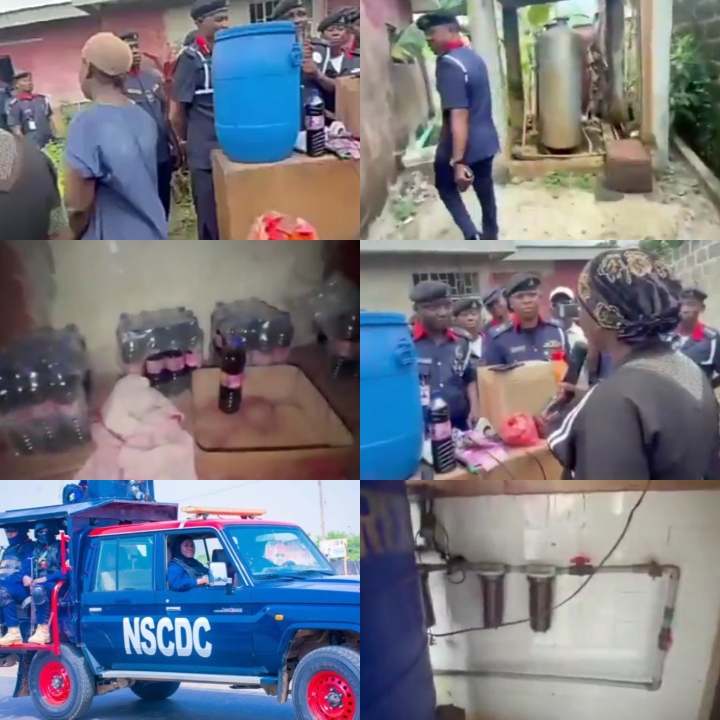
The Nigeria Security and Civil Defence Corps (NSCDC), Lagos State Command, has uncovered an alleged illegal fruit-juice production facility in the Badagry area of Lagos State and arrested two women in connection with the operation.
The suspects, aged 48 and 50, were arrested after NSCDC operatives conducted about five days of surveillance before raiding the facility in Aradagun, in the Badagry area. The operation was carried out with the support of a Nigerian Army formation in the area.
According to the NSCDC, the facility was allegedly producing a drink branded as “Barkas Juice” using water, synthetic flavourings, industrial sweeteners, colourants, dyes and other additives instead of real fruit.
The Corps also alleged that the production was carried out in an unhygienic environment and that the products were being distributed to markets in Lagos, Benin City in Edo State and other parts of Nigeria.
One of the major concerns raised during the operation was the NAFDAC registration number displayed on the product. The NSCDC said the number, 01-2166L, was purportedly fake. The Corps said it would work with NAFDAC and other relevant agencies as investigations continue.
Items reportedly recovered from the facility included cartons of the suspected adulterated juice, a truck, production machinery, chemicals, drums and a gas cylinder.
The NSCDC has ordered the immediate closure of the factory and said the suspects would face further investigation and possible prosecution.
Why Nigerians Are Asking Questions About NAFDAC
The discovery has also generated discussion about the role of the National Agency for Food and Drug Administration and Control (NAFDAC), particularly how unregistered or allegedly counterfeit food products can reach consumers.
However, the discovery of the factory by NSCDC does not by itself establish that NAFDAC failed to perform its regulatory duties. The specific circumstances surrounding the alleged use of the registration number, the distribution network and how long the products had been on the market still require investigation.
The incident nevertheless highlights the importance of cooperation between regulatory and security agencies in identifying unregistered production facilities and preventing potentially unsafe products from reaching consumers.
What This Means for Consumers
For Nigerians, the case is another reminder to pay attention to the registration details, packaging, production information and condition of food and beverages before purchasing them.
Consumers who encounter suspicious products can report them to the appropriate regulatory authorities rather than relying solely on the appearance or branding of a product.
The NSCDC investigation is ongoing, while the alleged health risks and regulatory status of the seized products will need to be established through appropriate official and laboratory processes.