Nigerian Care Workers Stage Musical Protest in UK, Demand Fair Treatment and Freedom
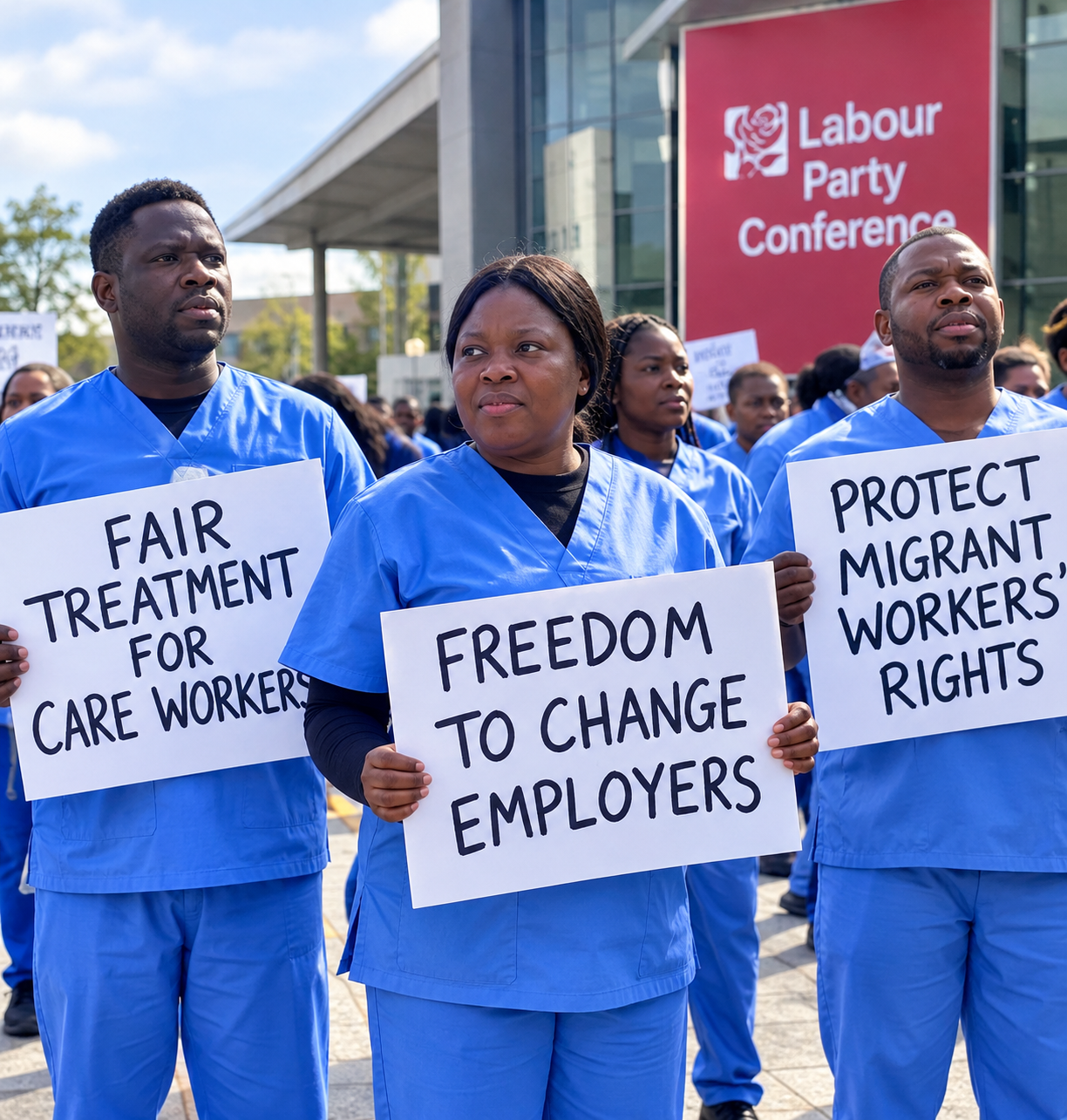
More than 400 migrant care workers have staged a musical protest outside the UK Labour Party Conference, using a song by Nigerian singer Asa to draw attention to what they describe as unfair immigration rules and the risk of exploitation.
The protesters sang Asa’s popular song “Jailer” to express their frustration with immigration policies they believe leave migrant care workers vulnerable to poor treatment and limit their freedom to seek better employment.
For many of the workers, the protest goes beyond immigration paperwork. It is about dignity, fairness and the right to work without living in constant fear of losing their legal status.
According to reports, the protesters want the UK government to allow migrant care workers to change employers without putting their immigration status at risk.
Under the arrangements they are challenging, workers who depend on employer sponsorship may face serious difficulties if they lose their jobs or need to leave an employer. Such restrictions can make it harder for some workers to escape unfavourable working conditions.
The protesters are also calling for the retention of the five-year route to permanent residency, which they see as an important pathway towards long-term stability and security in the United Kingdom.
For people who have travelled far from home to build a better future, uncertainty about their jobs, immigration status and ability to remain in the country can be emotionally exhausting.
The choice of Asa’s “Jailer” gave the demonstration a powerful Nigerian connection. Music has long been a way for people to express pain, frustration and the desire for freedom when ordinary conversations fail to capture the depth of their experiences.
By singing together while wearing their care uniforms and displaying chains attached to heavy objects labelled “employer,” the workers used a striking visual message to communicate how they feel about their situation.
Their demonstration also highlights the contribution migrant care workers make to society. These are people who help care for the elderly, support vulnerable individuals and provide essential services to families and communities.
Many leave their own families behind in search of employment and a better life. For them, fair working conditions and reasonable immigration protections are not simply political demands; they are closely connected to their livelihoods and future plans.
The protest raises important questions about how countries balance immigration policies with the protection of foreign workers.
Governments have the responsibility to manage immigration, but workers also deserve safeguards against exploitation and unfair treatment. When people feel unable to leave an employer because doing so could threaten their right to remain in a country, concerns about vulnerability naturally arise.
The demonstration serves as a reminder that behind immigration statistics and policy discussions are real people with families, responsibilities, hopes and dreams.
For the Nigerian workers involved, the message appears clear: they want the freedom to seek better working conditions without putting their future at risk.
As discussions about migrant labour and immigration continue, their protest has brought renewed attention to the need for a system that considers not only economic needs and border policies but also the dignity and welfare of the people who keep essential services running.
Ultimately, the workers' message is simple: the opportunity to work abroad should not mean having to surrender one's freedom, dignity or right to fair treatment.