Kaduna’s 100 CNG Buses Put Cleaner Transport and Climate Action on the Road
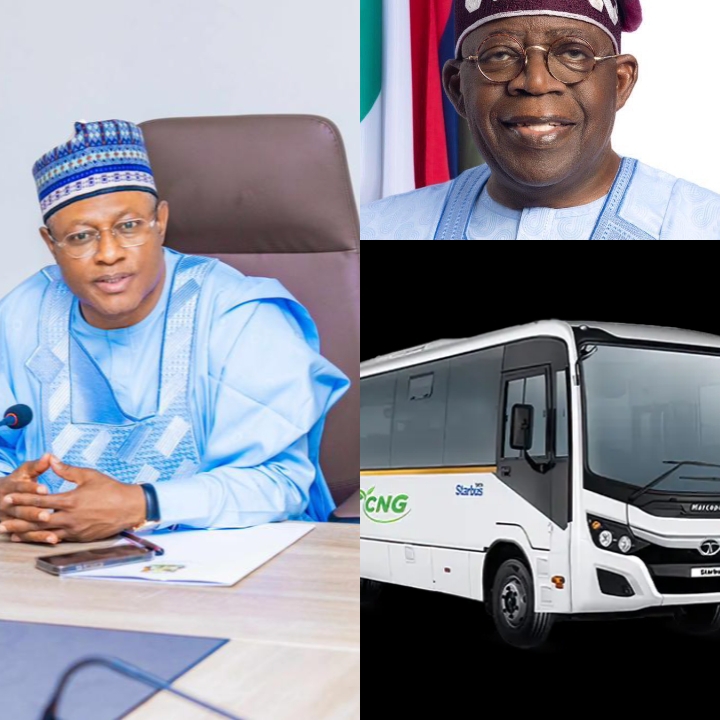
Kaduna State’s deployment of 100 Compressed Natural Gas (CNG)-powered buses is emerging as an example of how public transportation policy can combine economic relief for commuters with a transition towards cleaner urban mobility.
The programme, introduced under Governor Uba Sani’s administration, provides free transportation on major routes across the state. Federal Government figures show that the buses carried approximately 3.2 million passengers during their first year of operation, while commuters reportedly saved more than ₦3.5 billion in transportation costs.
The figures have recently attracted national attention. President Bola Ahmed Tinubu specifically highlighted Kaduna’s CNG scheme while discussing the Federal Government’s efforts to expand affordable alternative energy transportation across Nigeria.
More Than a Transport Programme
The climate significance of the Kaduna initiative comes from the type of fuel being used as well as the mass-transit model.
CNG vehicles generally produce lower carbon dioxide emissions than comparable petrol vehicles, while natural gas powered heavy-duty vehicles can also reduce some pollutants associated with conventional diesel engines. However, the overall environmental performance depends on factors such as vehicle efficiency, fuel supply and methane leakage, meaning CNG should not be treated as a zero carbon solution.
The use of high capacity buses also means that many passengers can travel using fewer individual vehicles. In principle, moving more people through organised mass transit can reduce the amount of fuel and road space required per passenger compared with a transport system dominated by numerous smaller vehicles.
Kaduna has also been developing supporting infrastructure. State authorities said 200 modern bus stops were being constructed to support the 100-bus fleet, while the buses are equipped with Intelligent Transport System technology that allows their movements to be monitored from a central control centre.
The Next Climate Opportunity
The longer-term opportunity could extend beyond conventional CNG.
Natural gas vehicles can also operate on biomethane, which can be produced from organic materials including agricultural residues, sewage and biodegradable waste. That creates a potential connection between transportation, agriculture, waste management and renewable-energy development.
For a state with agricultural activity and substantial organic waste resources, developing such a value chain could eventually provide another pathway for reducing the carbon intensity of public transportation.
What It Means for Kaduna Residents
For ordinary commuters, the immediate impact is economic. Free bus services reduce the amount households need to spend getting to work, school, markets and other destinations.
The reported ₦3.5 billion in savings illustrates the scale of that effect during the programme's first year. Kaduna State has also indicated that the service is intended to expand to Zaria and Kafanchan once the necessary CNG refuelling infrastructure becomes available.
From a climate perspective, the programme demonstrates how transport policy can address more than one problem at the same time, lowering commuting costs, improving access to public transportation and beginning a transition away from more carbon-intensive fuels.
CNG is not the final destination for a net-zero transport system. But Kaduna's experience shows how a transition in everyday public infrastructure can bring economic and environmental considerations into the same policy conversation.
The next question will be whether the state can sustain the service, expand its coverage, maintain the buses and infrastructure, and progressively move towards even lower-carbon transport options.