J.P. Morgan Adds Nigerian Bonds to New Global Index, Nigeria Gets 7.4% Weighting
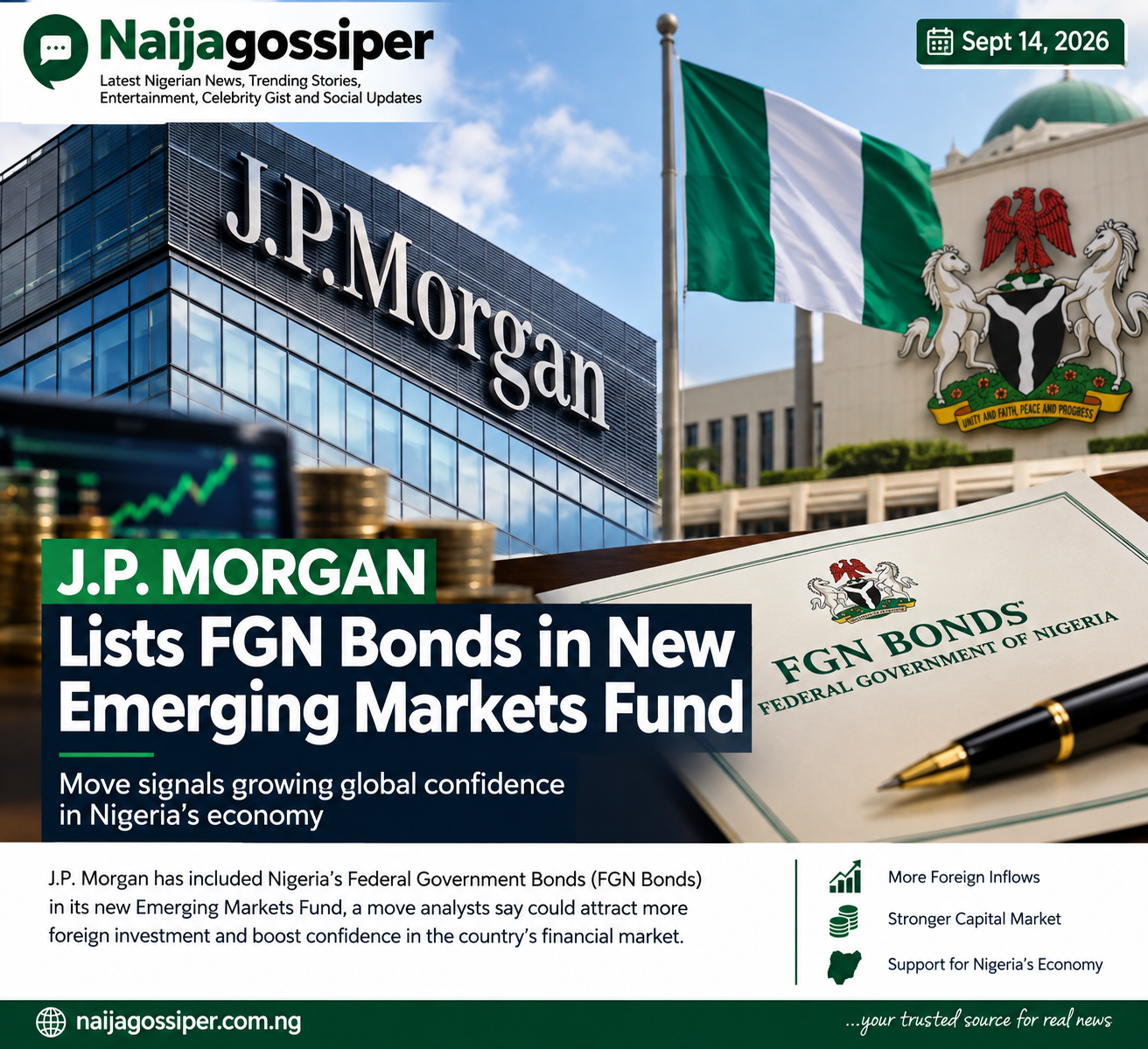
Abuja, September 14, 2026 — Nigeria has secured a significant position in J.P. Morgan’s newly introduced Government Bond Index Emerging Markets Edge (GBI-EM Edge), with selected Federal Government of Nigeria (FGN) bonds assigned a 7.40 per cent weighting. The development marks Nigeria’s return to a J.P. Morgan government bond benchmark after more than a decade and could increase the country’s visibility among international fixed income investors. The new index tracks local currency government debt across 26 frontier emerging markets and represents approximately $328 billion in government bonds globally. Nigeria’s allocation translates to about $17.47 billion of eligible FGN debt across 16 instruments.
Why Nigeria Qualified
According to the Federal Ministry of Finance, Nigeria met the key requirements for inclusion based on the liquidity of its bond market and the size of its outstanding government securities. FGN Bonds are actively traded through the Two-Way Quote System, while eligible bonds across the relevant tenors exceed the minimum $250 million issuance threshold required for the index. Nigeria's 7.40 per cent weighting is among the highest allocations among the 26 countries covered and is close to J.P. Morgan's 8 per cent maximum country weighting.
Nigeria Returns After 11 Years
The inclusion is particularly significant because Nigeria was removed from J.P. Morgan's GBI-EM Global Diversified Index in 2015 amid foreign-exchange liquidity concerns. The latest development represents the country's return to a J.P. Morgan benchmark after that period. Nigeria was initially included in the firm's emerging-market bond index in 2012, an earlier move that the Federal Government said helped attract foreign investment and reduce government borrowing costs.
The government has linked the latest development to reforms aimed at improving foreign exchange liquidity, stabilising the naira and strengthening broader economic conditions.
What It Could Mean for Nigeria
The inclusion could encourage funds that track the new index to increase their exposure to Nigerian government securities. Higher participation from international investors could increase demand for FGN Bonds, potentially pushing bond prices higher and putting downward pressure on yields. Lower yields could eventually reduce the cost of servicing the Federal Government's naira denominated debt, although the actual scale and timing of any foreign inflows will depend on individual investors and market conditions.
Improved activity in the FGN bond market could also strengthen liquidity across Nigeria's wider domestic debt market, with possible spillover effects on other government securities.
Finance Minister Reacts
Minister of Finance and Coordinating Minister of the Economy, Taiwo Oyedele, described the development as an independent indication of growing international confidence in Nigeria's economic management. Oyedele said the government remained focused on the reforms necessary for Nigeria to eventually regain full inclusion in J.P. Morgan's flagship emerging market bond index.
Citizen Impact
For ordinary Nigerians, the immediate effect may not be visible in everyday transactions. However, stronger demand for government bonds could have broader economic implications if it contributes to lower government borrowing costs. Over time, cheaper domestic borrowing could give the government more fiscal room for infrastructure and other development priorities. However, the benefit will depend on whether increased investor confidence is sustained and whether lower borrowing costs translate into more efficient government spending. In simple terms, Nigeria's inclusion gives the country's government debt greater visibility among global investors and creates another potential channel for foreign capital to enter the Nigerian financial market.