Dangote Refinery IPO: How Nigerians Could Benefit as Plant Targets 1.4 Million Barrels Per Day
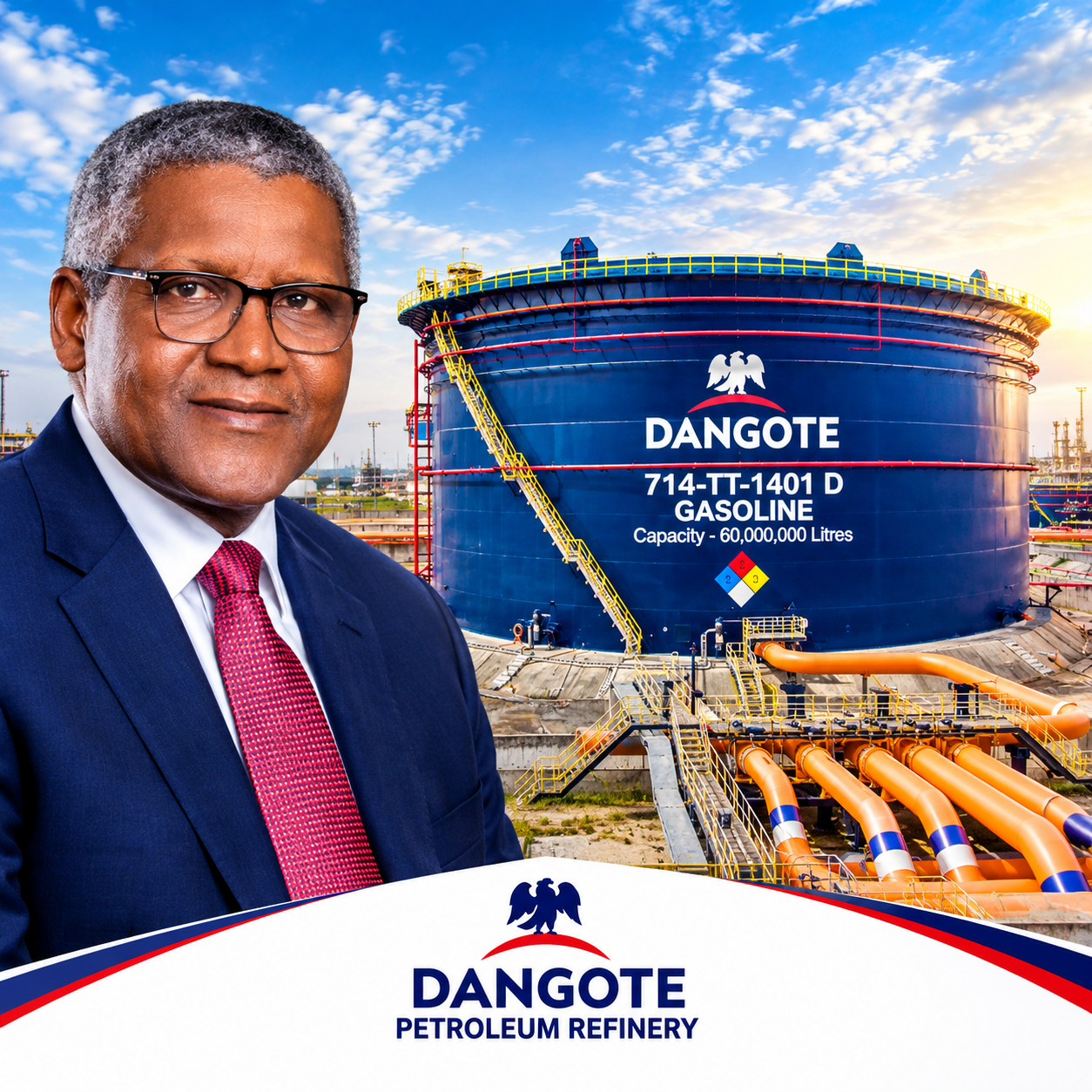
The Dangote Petroleum Refinery and Petrochemicals FZE is taking a major step toward wider public ownership as it prepares to offer 4.1 billion ordinary shares at ₦525 each in what is expected to become Africa's biggest initial public offering.
The offer could raise approximately ₦2.15 trillion ($1.63 billion) if fully subscribed. The subscription period is scheduled to run from September 14 to October 13, 2026, with investors able to start with as little as 10 shares, costing ₦5,250.
The IPO signing ceremony is being held in Lagos, marking a significant transition for a refinery that was previously privately owned and built with an estimated $20 billion investment.
An opportunity beyond wealthy investors
One of the most notable aspects of the offering is the relatively low minimum subscription.
At ₦5,250 for 10 shares, ordinary Nigerians are being given an opportunity to become shareholders in one of Africa's most important industrial projects. Dangote has specifically presented the IPO as a way of widening ownership of the refinery, saying that workers and ordinary people should have the opportunity to hold stakes in the business.
That does not mean every investor will automatically make a profit. Like every investment in shares, the value of the investment can rise or fall, and investors should study the IPO prospectus and understand the risks before subscribing.
Where the IPO money will go
The money raised is intended primarily to support the refinery's expansion programme and other growth-related capital expenditure. The company plans to increase processing capacity substantially, with the long-term target of reaching 1.4 million barrels per day.
The planned expansion is estimated at about $14.3 billion and would take the facility from its current 700,000-barrel-per-day level to 1.4 million barrels per day. Reuters reports that the latest project timeline points to completion in 2029.
If achieved, the enlarged refinery would rank among the world's largest refining facilities and would significantly increase Nigeria's domestic refining capacity.
What could Dangote Refinery look like in the coming years?
At full expansion, the refinery is expected to process up to 1.4 million barrels of crude oil every day. The facility already produces products including petrol, diesel, aviation fuel and LPG, while its wider industrial complex includes petrochemical production, storage, marine and logistics infrastructure.
The bigger refinery could mean greater volumes of petroleum products available for the Nigerian and wider African markets.
That could become particularly important for Nigeria because the country has historically depended heavily on imported refined petroleum products despite being a major crude oil producer.
A larger domestic refining base could reduce the amount of foreign exchange required to import refined products, improve supply security and potentially strengthen Nigeria's position as a petroleum-products exporter.
How Nigerians could benefit over time
The benefits of the project could extend beyond people who purchase shares.
A larger refinery requires workers, contractors, engineers, transport operators, suppliers and other businesses across its value chain. The refinery itself says its industrial ecosystem has already created tens of thousands of direct and indirect jobs.
Expansion could therefore create additional economic activity around manufacturing, transportation, logistics, engineering, maintenance and petroleum-related services.
There could also be broader benefits if Nigeria keeps more of the value generated from refining within the country rather than exporting crude and importing finished petroleum products.
For Nigerian shareholders, meanwhile, the attraction is the possibility of participating financially in the company's future growth through dividends and/or appreciation in the value of their shares. Those returns, however, are not guaranteed.
A potential boost for Nigeria's industrial future
The significance of the Dangote Refinery goes beyond petrol.
If the expansion succeeds, Nigeria would have a much larger domestic refining platform capable of serving its own market while supplying other African countries. The company already exports refined products to international markets, including Africa and Europe.
The project could also help deepen Nigeria's capital market by bringing a major privately controlled industrial company into wider public ownership.
For a country seeking to attract investment, increase local manufacturing and reduce dependence on imported refined products, the refinery's expansion could become an important part of Nigeria's industrial story over the next decade.
The IPO therefore represents more than an opportunity to buy shares. It is also a test of whether ordinary Nigerians can participate meaningfully in the ownership of one of the country's biggest industrial assets—and whether the expansion can translate into stronger energy security, jobs, investment and economic activity for Nigeria in the years ahead.